“who wrote this?” quipped chef Devine.
“that was me chef” replied the young commis chef, Matthew.
“what the f%$k does dark choc mean” inquired chef Devine.
“It means chocolate chef? Choc is shorthand for chocolate, eh” replied Matthew, sort off smugly.
My head chef then lit young Matthew up like a f%$king Christmas tree.
‘how would I know what this is if I was French’ & ‘are you at the pub with your mates’ are but a few of the queries chef Devine presented to young Matthew.
Now I don’t know if it was the cocky smugness that Matthew presented in his general demeanor, or if chef had just been ripped ‘a new one’ by the general manager that day, but Matthew was then besieged by our head chef for about 20 minutes in relation to the importance of behaving like a professional in his kitchen. Short hand writing, especially on the ‘needs ordering’ whiteboard, had no place in his kitchen. That kind of thing was for Muppets and amateur’s, in his mind anyway.

We had some really good coverture chocolate in that kitchen. The higher standard cooking chocolate is used by professionals.
We had the typical 40% – 50% cocoa solids varieties, while we also carried a 70% variety.
Chocolate is one of the worlds true food pleasures. If I really want to get a lady to come and enjoy some company with me, I am going to plan my courting activities around eating chocolate with her.
This is not only because of the well-known aphrodisiac qualities associated with chocolate, but because envisioning our favourite chocolate treats gets us all salivating, doesn’t it? (unless you have an allergy you poor bugga)
The cacao tree is recorded to have been cultivated through agricultural practices since around 3000 years ago. Owing to the Mayan and Aztec civilizations, for whom produced a chocolate beverage known as xocolatl.
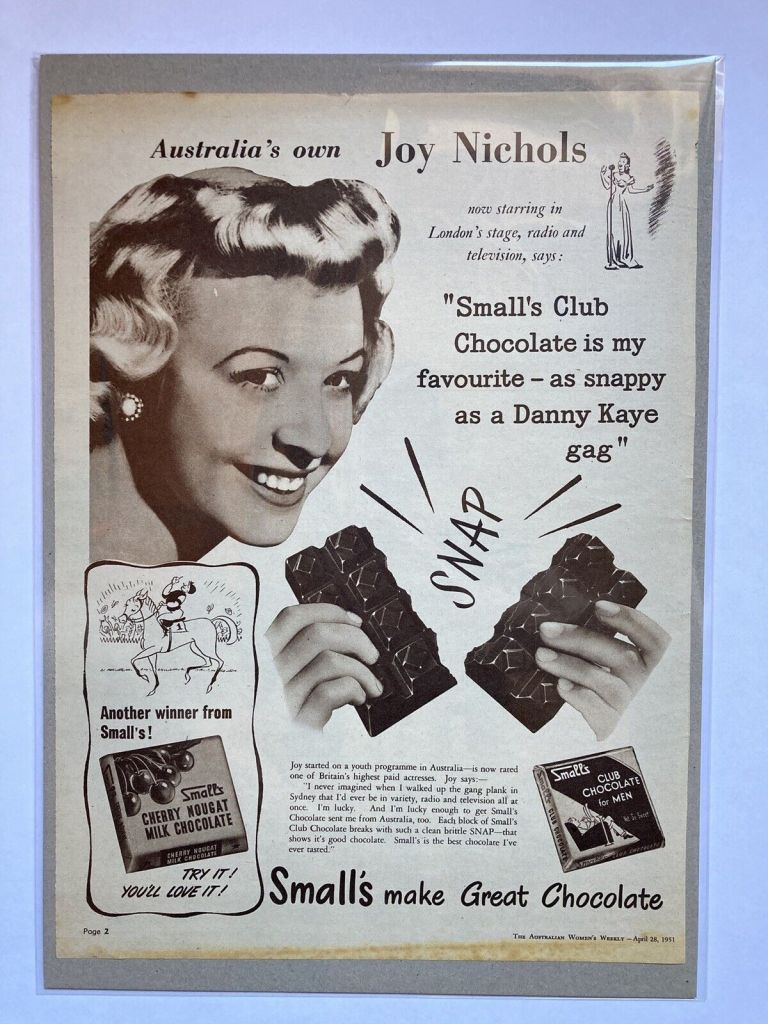
This drink, xocolatl, was believed to carry aphrodisiac and medicinal properties. According to Afoakwa Eo, from the South African Journal of Clinical Nutrition, the Aztecs and Mayans were on the money.
The spanish conquistadors, the ones who dropped small pox on the South Americans around the 1500s, brought xocolatl back to Europe in the 16th century, for which was indulged upon by the nobilities Sugar and milk were soon adapted to xocolatl in order to make the drink sweeter and more western like in its qualities.
The 19th century industrial revolution gave significant prominence to xocolatl, for which had become more prominently known as chocolate by then in its adopted homelands. Chocolate candies, ice cream, and many other baked sweets were being produced in high quantities for us peasants to enjoy more broadly.
Chocolate in Tasmania began in 1921 in the township of Clairmont. Cadbury’s chocolate had picked Tasmania as their first expansion outside of the United Kingdom. And as true to this day with nearly any food item produced in Tasmania, my island home was chosen due to its clean environment, one much cleaner in comparison to Cadburies home factory in Birmingham, in the English midlands anyway.
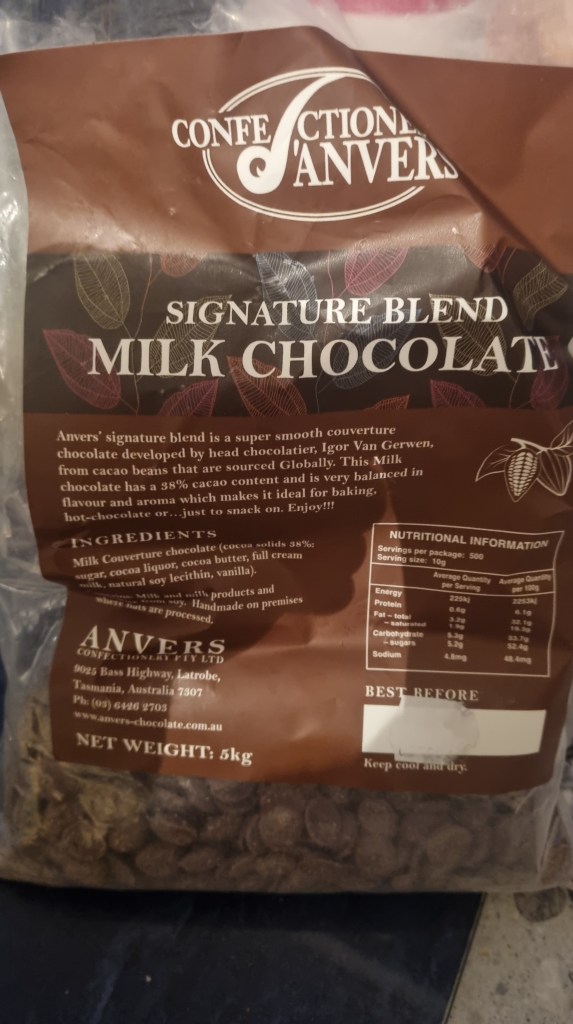
Anvers chocolate factory, situated around 45 minutes drive from Launceston in Tasmania’s north, is my favoured cooking chocolate if I want to play with chocolate from home state.
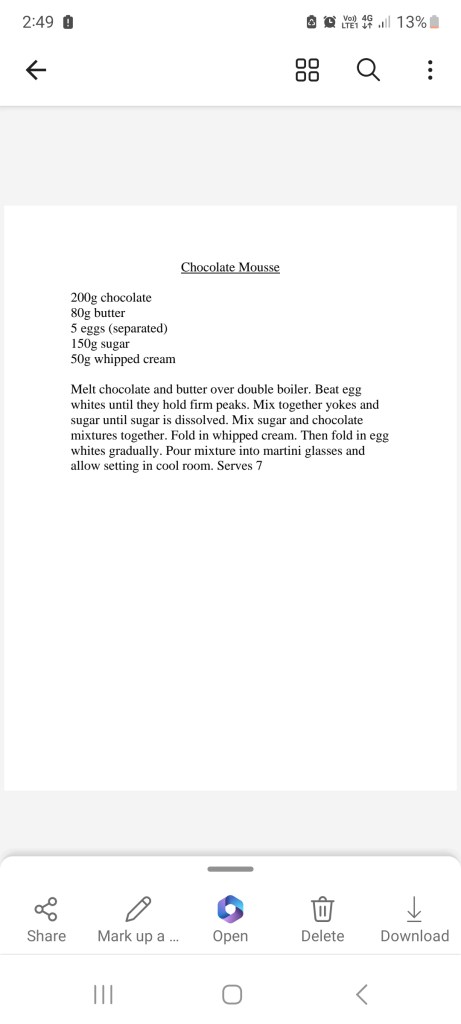
I still own a rough chocolate mousse recipe that a pastry chef threw at me one day when I was a third year apprentice. The mousse is average at best, and it refuses to hold its buoyancy if followed with any other chocolate.
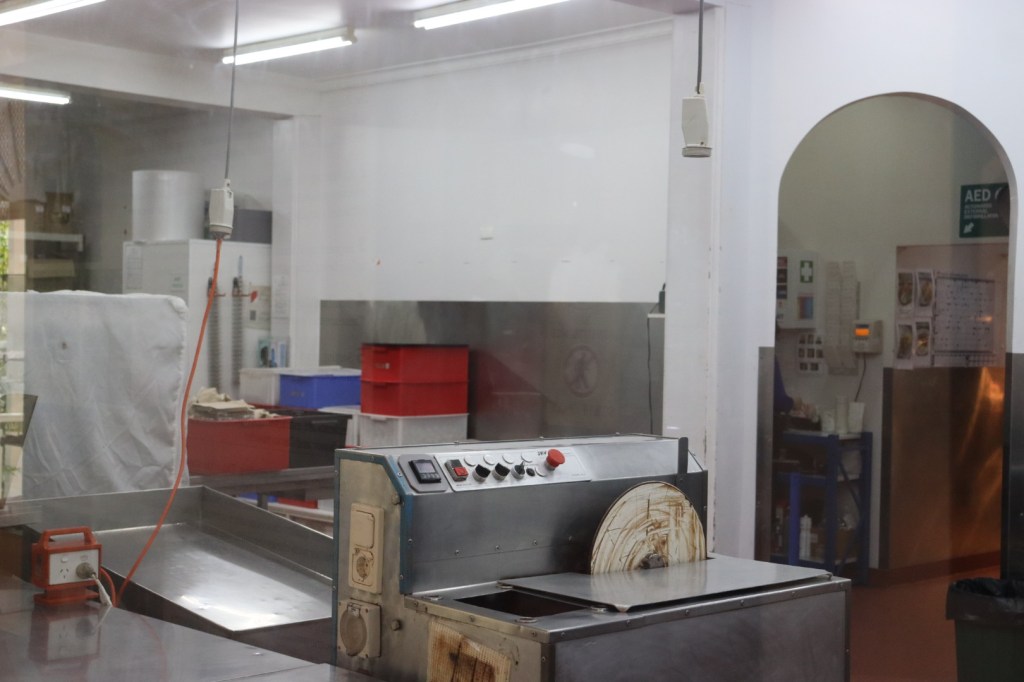
House of Anvers was established in 1986 by Belgium chocolatier Igor van Gerwen, who had transformed his home garage into a chocolate ‘dungeon of pleasure’ in the early days.
After business got bustling, the house of Anvers team transitioned into the heritage listed Wyndarra lodge in 2002. This historical building presented a means to showcase a museum, café, chocolate shop, and most importantly, a place to produce on of Australia’s most premium Belgium chocolate varieties.
House of Anvers is also Australia’s only producer of the once thought extinct ‘pure’ cacao chocolate, the Maranon Fortunato No.4. If I had of known about this pure chocolate variety, I would have snapped some up for this story for sure. I will chase some up next time.
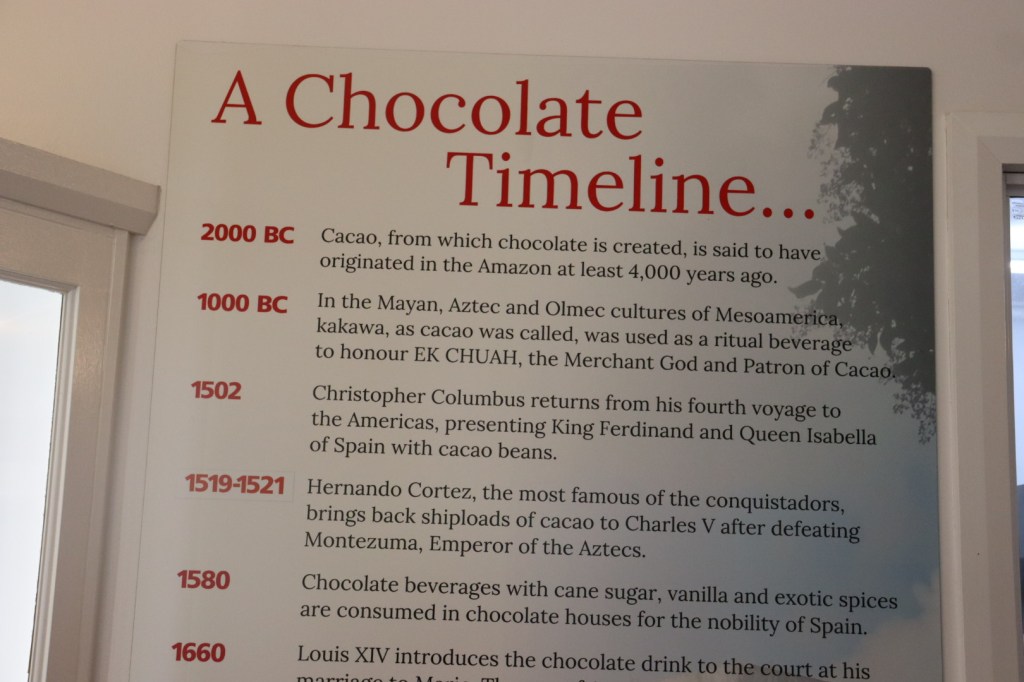
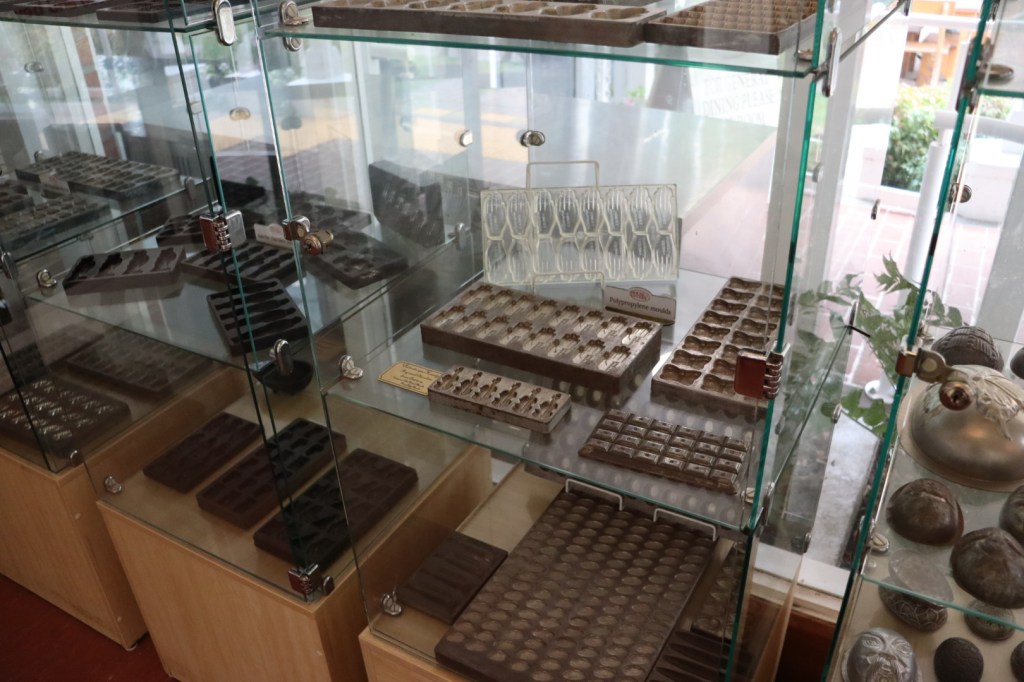
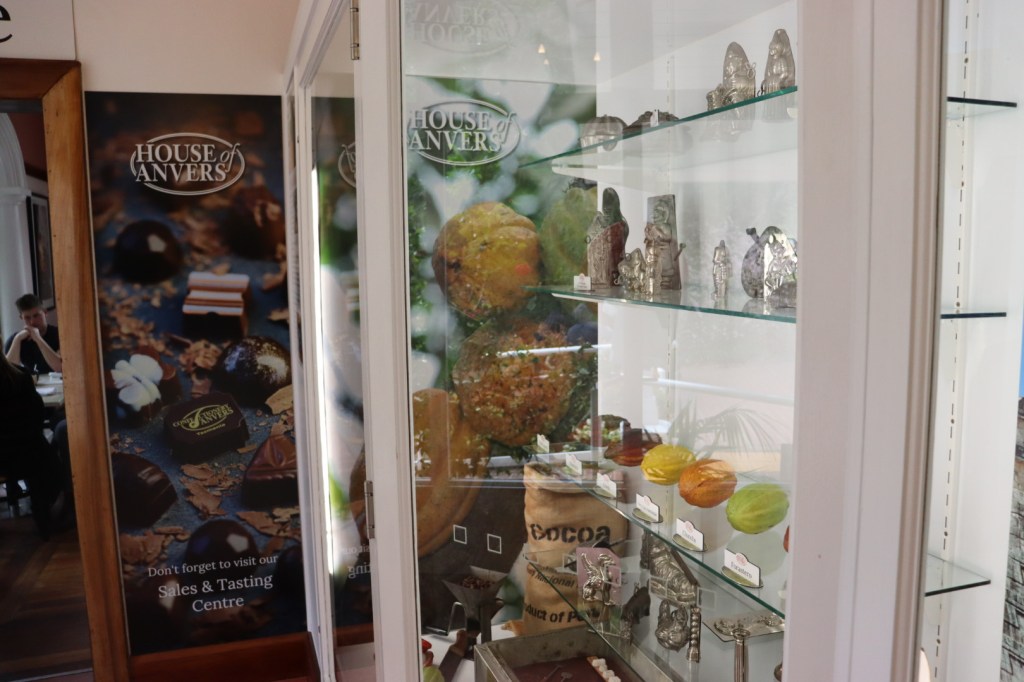
Chocolate holds some very intrinsic value to all of us, especially those in the city of Vienna, Italy.
On my mission to create something from chocolate for you readers to enjoy if you read this story, I came across the traditional Sachertore. Then, upon doing my homework on this divine, classic chocolate cake, I discovered a legal battle between opposing eateries in Vienna.
These establishments, the Hotel Sacher and the Demel cafe, had a court battle in regards to who produced the true traditional, or original Sachertorte.
From 1954 to 1963, these two businesses duked it out through the most official of channels.
After much deliberation, roughly 9 years worth, Hotel Sacher won the right to call their Sachertore the true ‘Original’ one.
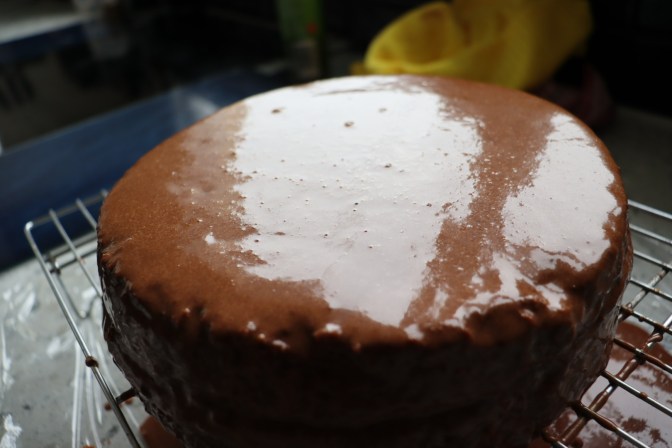
One of my first culinary endeavors centered around making the ‘devils food cake’ way back when I was young grasshopper in the early 90’s before my family arose from slumber.
Be certain to get down to your local chocolatier next time you want something to get you salivating on many different levels. And if you are in Tasmania, be certain to go see the team at the house of Anvers, Igor would love to say hello and sweeten your day.
Keep an eye out for my next story, and I am still avoiding writing short hand at work since that day young Matthew got smoked for writing shorthand chocolate.
# Check out my Sachertorte attempt here
Important dates in relation to chocolate salivation-
1502: Christopher Columbus trades cacao beans for small pox and brings some back to Spain from the Americas.
1657: The first chocolate house of ‘pleasure’ opens in London.
1828: Dutch chemist Coenraad van Houten invents the cocoa press, which makes it possible to separate the cocoa butter from the cocoa solids. Sparking chocolate salivation on completely unforeseen levels.
1875: Swiss chocolatier Daniel Peter invents milk chocolate by adding milk powder to cocoa, sparking the dawn of modern chocolate.
1902: Collingwood football club wins its first premiership, going back-to-back too.
1904: Milton Hershey opens the first Hershey’s chocolate factory in Pennsylvania, bringing modern chocolate closer to its original homelands.
1947: M&Ms are introduced on an unsuspecting population in
1983: I was born.
1986: Anvers was start in the garage of Igor van Gerwen.
2010: Collingwood football club wins its most recent premiership.
References;
https://www.tandfonline.com/doi/abs/10.1080/16070658.2008.11734163
https://www.bbc.com/news/business-27326358
—
# I really enjoyed researching chocolate for this story. From using Anvers as an apprentice, making devils food cake as a grass hopper way back when, to the many easters as a child making myself sick, chocolate holds dear to the heart.
Numerous times over the culinary journey I have spoken with peers about doing chocolate things differently, but it always come back to three components. The chocolate, cream, and berries.
The chocolate cake speaks for itself, anglaise is majestic, being traditional custard. It is simply cream on another level. Then there is raspberries, one of those things the is bliss on its own, yet can be amplified to suite whatever your appeasement requires.
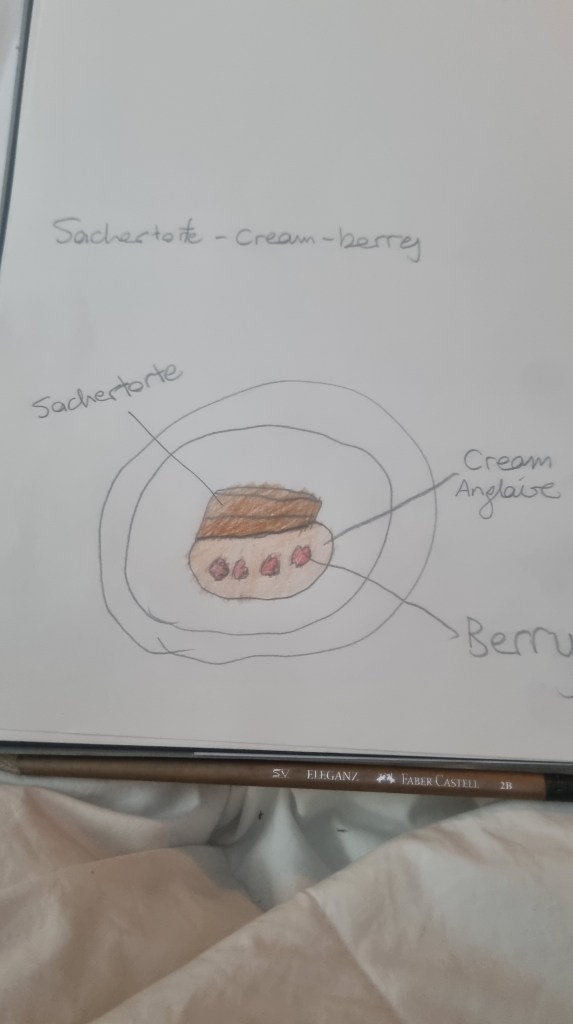
This is dish is just simple shit done at a higher standard.
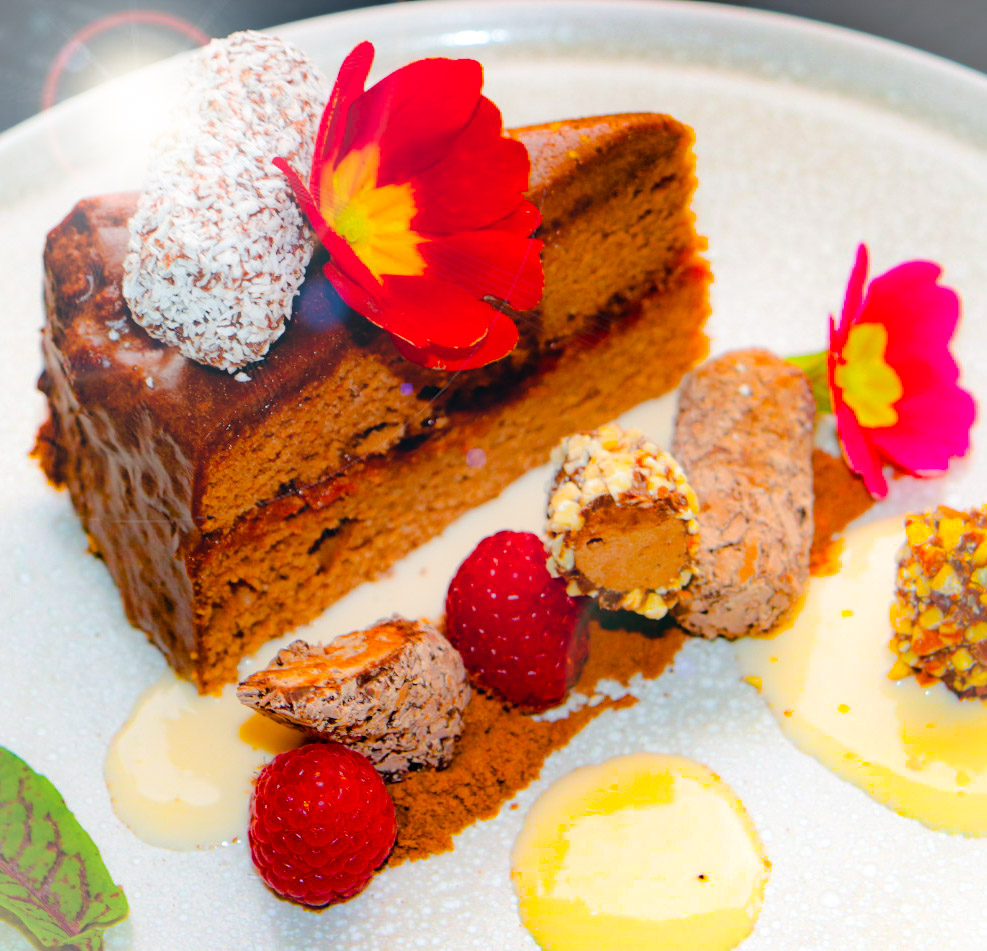
The final cut ✂️ 🔪 🥒

 Tales of a Tassie Chef