As technology grips all aspects of our lives, one can only assume it is just a matter of time before food becomes futuristic and technologically enhanced to the point that we accept it as common fodder amongst all our other enhanced social normalities!
After leaving the hot and humid landscape of tropical Queensland a few football seasons ago, my ex-wife and I landed at a restaurant that would go on to gain a chefs hat, an award for which is regarded as a significant distinction within the Australian culinary landscape.
Nine months into the job and I still remember the shock on my head chefs face when his restaurant was awarded a chefs hat. We cooked really simple food, really, really well at this place, at York cove, in George town, Tasmania.
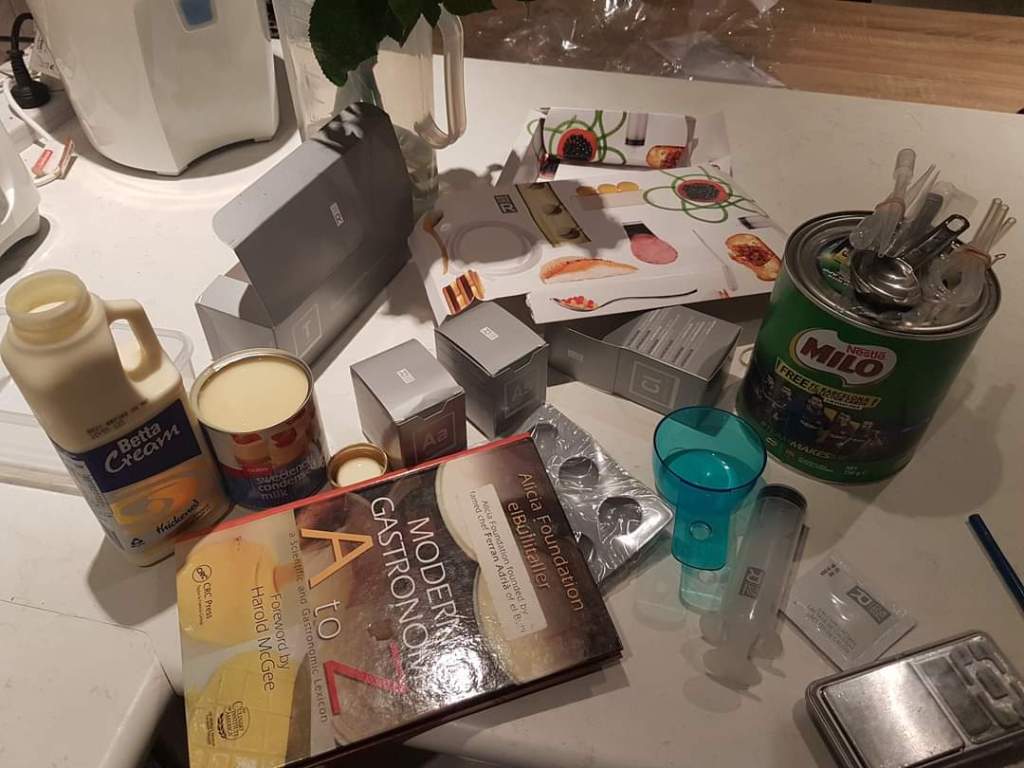
My head chef and I had had a conversation at one point not long after he got his chefs hat, about the potential to use all the powders, gums and setting agents that all the top end, trend setting restaurants utilized. We agreed to meet back in a few months time after doing some homework on ‘modern gastronomy’ and the apparatus and stock required to play those kind of games in a commercial kitchen.
I can still vividly remember the disappointment on my head chefs face though, when we finally reached our agreed deadline, after I had failed to deliver anything.
It wasn’t that I wasn’t interested in agar powder or soy lecithin, I was more concerned with gardening and getting stuck into my management diploma at the time. Plus my head chefs food was pretty damn good without the wank factor of all the gums, special ingredients and sous vide techniques required for modern gastronomy.
‘If it ain’t broken, don’t fix it’ for mine
So nearly 10 years later and I am a food and innovation student at the university of Tasmania. While I have not long ago finished working on a futuristic printed food project as a first year student in my bachelor of science degree.
Working with the lovely Ms. Samantha Lester, from the designs branch of academic studies. Collectively, we delved into some printed food for her dystopian, futuristic food project.
Yeah baby, that’s right. Printed! Food!
…
I have been known to dwell under rocks from time to time, yet I know enough about the food industry to know that people have been printing food for a few years now. My ears first caught hold of a lecturer discussing a food printer on an excursion towards the end of semester one, 2021. As soon as I had my chance, I was onto her. ‘How can I get involved with your food printer’ I enquired, as this is what I came to university for. Food innovation and all the technology that goes with it!
The university has two Foodini’s, 3D printers that can print food. These bad boy print pureed food stuffs, into any shape you program into it. Sounds fun and futuristic, but I can assure you, these pieces of apparatus are damn hard work.
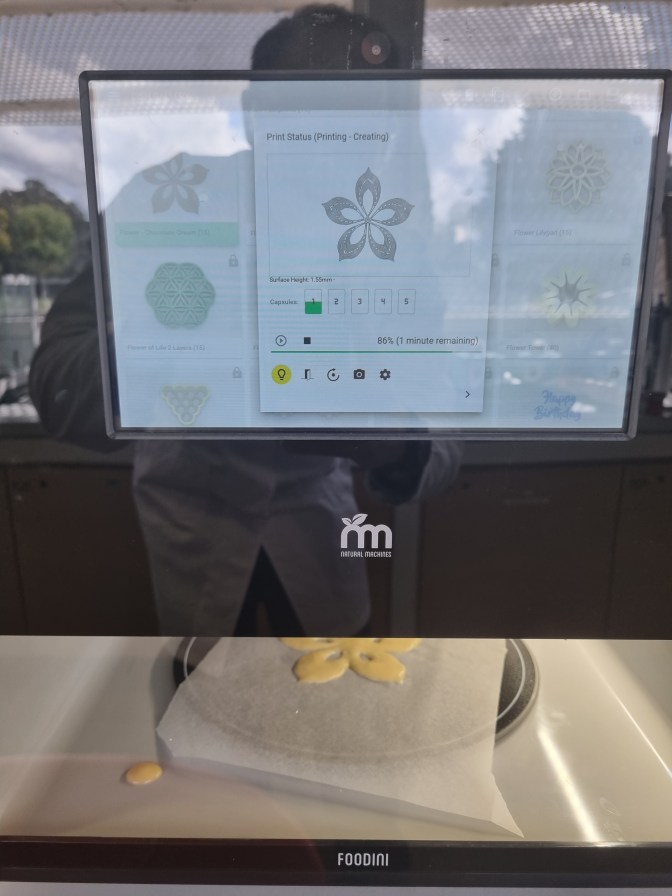
Have you ever poured a hot sauce onto a plate and had it hold its shape? I’m assuming you said no, because neither have I. Without something in the sauce to set it into shape, or some kind of barrier to hold the sauce into place, the pretty flower that you tried to draw with your nans gravy and cauliflower cream will simply just turn into a puddle of runny slop in the middle of your plate.
Ms. Lester needed help from a real culinary food slinger to pull of her graduation project. A project that was to be based around a dystopian future, one where you can not buy whole foods anymore. The only foods available to us mere mortals were to be liquids, purees and pre-cooked items, as we ruined the majority of our natural resources being greedy and complacent.
I researched some information as to what the hell I could realistically do with a food printer. And for the most part, all I could find were pretty shapes patterns and sphere type structures.
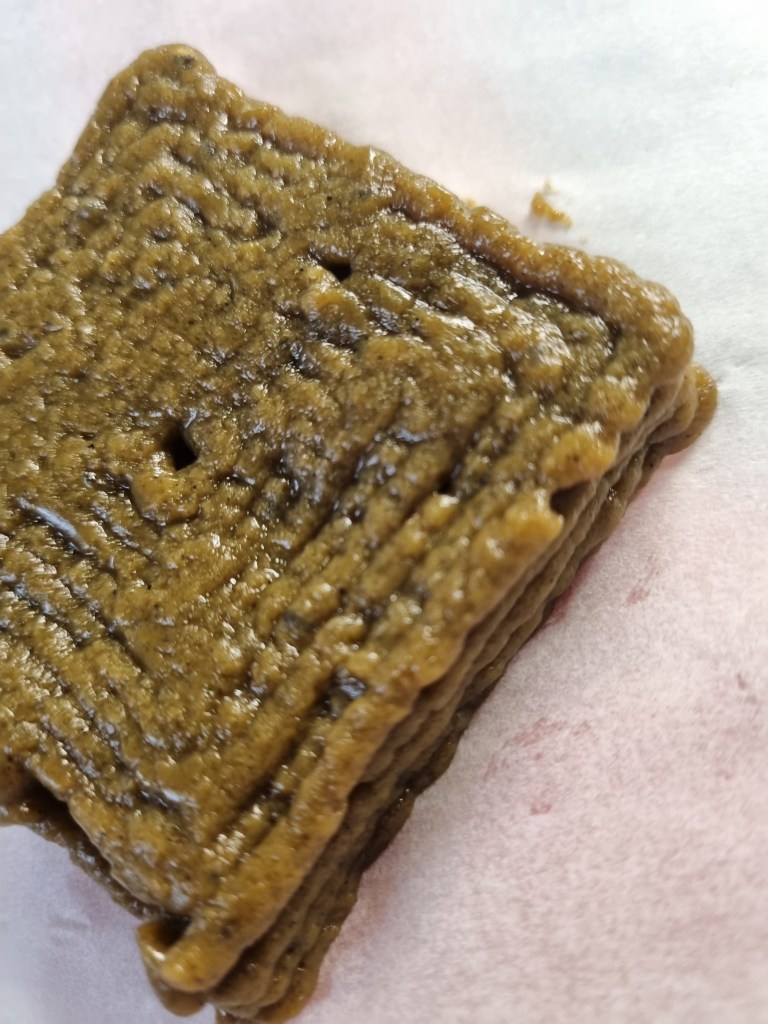
So I decided to go with a set mushroom duxelles printed into the shape of a mushroom burger. Duxelles is a delicious, classical mushroom sauce, for which can be easily made from food scraps that someone might otherwise throw away.
I used potato starch to thicken my duxelles. Your nan used to use flour for the purpose of thickening your Sunday roast’s gravy, but I like potato starch better. Most chefs and home cooks use wheat flour or corn flour as a sauce thickener, yet potato flour has a distinct flavour that wheat and corn flours lack.
I then incorporated gellen gum just prior to printing. Gellen has the ability to set gels, in the same manner as gelatine does, yet the variety of gellen I employed can be heated and cooked, yet still hold its shape.
After multiple attempts and failures, Ms. Lester and I finally printed a mushroom burger that held its shape once reheated for the centrepiece of her event.
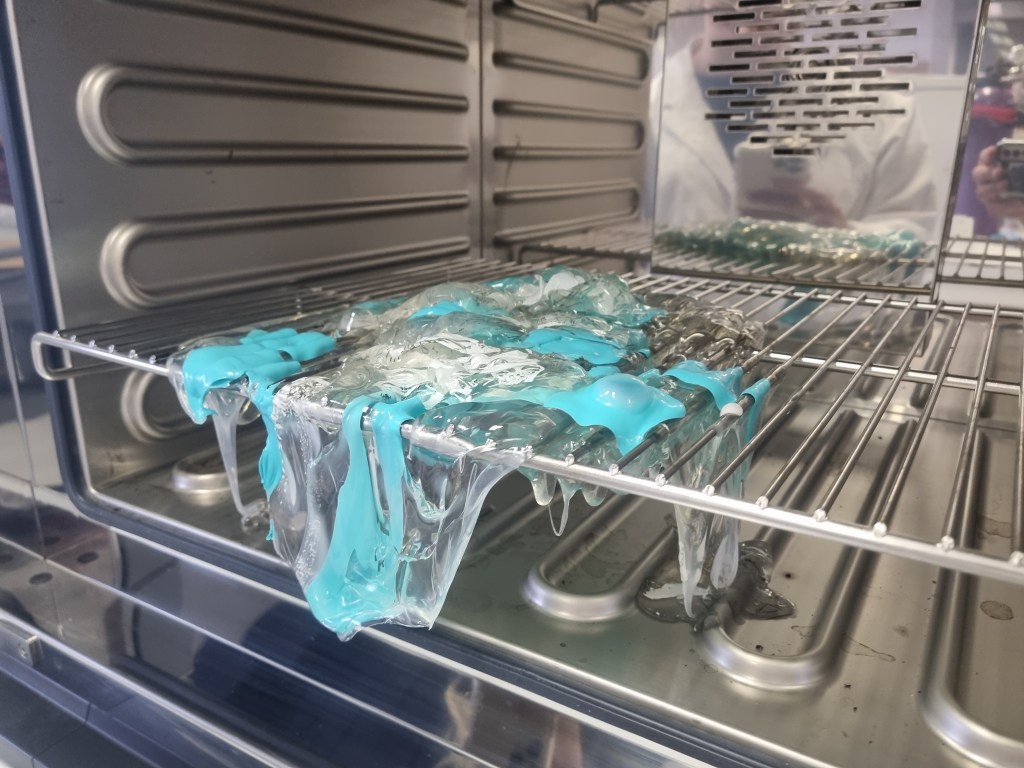
Apart from cooking a few plastic syringes that someone had left in an oven one point, the food printer project went well.
We showcased the mushroom burger with beef and dukkha gel cubes, fish tarts, elderberry lollies and pineapple nougat.
I couldn’t have been happier that after surviving my first real year as university student, and I was fortunate enough to complement a real deal project in the academic landscape with my culinary cooking skills.

I have been paid a wage for the last 20 plus years to deal with food, which in part has involved turning numerous food compounds into tasty, artistically positioned and consumable dishes for people like you, while also trying to ensure I make as much profitable flavour from the food I utilize that I possibly can. I have been either making something out of food scraps for my head chefs as a junior chef, or encouraging and teaching others how to make something we can sell out of what might otherwise get thrown into the bin for the duration of my career.
Making something tasty and innovative out of trimmings and leftovers is what being a chef is all about for mine! If you can make something out of nothing, or next to nothing as a chef, then you know what your doing.
Real skill comes to the front when we are out of your comfort zones. Be it as a chef, or any other trade really. For us professionals anyway.
If you delve into most Asian cuisines, the basis for many of their most popular dishes evolve around stocks. Highly flavoured water solutions that incorporate all the odds and ends of their kitchens, for which are tasty AF.
Curing, caning, bottling and many other forms of food preservation are accepted amongst todays society.
Yet when I enquired through many channels about printed meats and set mushroom sauces, my queries were most often meet with disbelief that I was even doing what I was doing with a food printer.
So given the vast amounts of food that goes to waste all over the world every year, be it roughly 30% of the food we produce, and with only 10% of the worlds population that actually goes hungry world wide, adopting and accepting some of our futuristic food ideas might actually help solve world hunger at some point.
Or some other type of innovative food idea will have to one day change what we are doing with anyway. I’ll be sure to explain later.
…
My university journey is only three years deep. With two of those years in the university of Tasmania’s preparation program, and one in my bachelor of science degree. The team at Utas has given me the scope to fulfil my pre-adolescence hopes and dreams of being a scientist, the dream I had before I got thrown in the deep end as a teenager.
The food innovation and safety team, led by professor Roger Stanley, will be running many more food projects for myself and other students to get involved with in the future.
Being at the frontline of food innovation will be hard work, yet I couldn’t be happier to be involved with the University of Tasmania food team.
Have a look at the university preparation program at the University of Tasmania if you need to get yourself fluent in academic studies again if you decide you want to change career paths. It is free for domestic students and extremely flexible for those that have much to balance in life. This course got me the results I needed to catch up on what I missed back in high school.
You will need to build some fluency and prove you can handle the hustle of university life through the aforementioned preparation course. While then, if you are up to it, you can jump into a science degree or something similar.
The university of Tasmania has given a chance of lifting my game to academic standards and doing my Mum and Dad proud. And that is not to say that there is anything wrong with being a chef, but I do not think that my parents had intended on me having to take the path I have had to take in life thus far.
Check out the university of Tasmania through one of my links and chase those dreams baby.
I look forward to showcasing many of my food creations with you as I progress through my studies. While I best be getting something up for my old head chef from Georgetown, as it has been nearly ten years since I told him I would have something soon to show him from a modern gastronomy perspective!
References and links-
University preparation program
University of Tasmania’s food and innovation centre
The Foodini food printer

 Tales of a Tassie Chef