2006
“I’m keen to come down and have a look Fausto” I informed my potential employer.
“no worries mate, see you when you get here” Fausto replied over the phone, or something along those lines.
I had to borrow a vehicle to get down to the central midlands of Tasmania so I could go suss the place out in a couple of days time. It was either Campbelltown or cradle mountain, as I was in need of a breather from the cold, murky depths of Launceston.

I known about about Zeps café through an apprentice I had schooled with during my first year of trade school at Tafe Tasmania. This dude was as a skinny as a twig, smaller than me even, one of those ‘bouncing of the walls’ kind of people, with these huge Popeye forearms from ‘banging out’ with a whisk for most of his working week! I still remember him putting shit on the rest of us first year apprentices for using electric beaters while we all whipped up whatever we were whipping during class. He had always whipped with a hand whisk, and had the forearms to prove it. If he wanted to give himself carpel tunnel, then ‘good on him’ I thought. I am big fan of holding onto tradition, but I work smart, not hard! If I want big arms, then I’ll go lift heavy things, and my Chantilly creams nearly always goes in the kitchen aide!
So I rocked into the kitchen mid morning and got a great insight into the vast array of hand made delicacies at Zeps café when I arrived for my interview. Mr. Fausto gave me the grand tour of the premises, introduced me to the staff and showed me the accommodation quarters.
‘So you want to come down or what champ?’, Fausto inquired enthusiastically after about an hour or so of touring the Café, and the many adjacent farmlands of central Tasmania’s Campbelltown.
“I sure am Fausto! I have another gig to check out on cradle mountain tomorrow though, but I think I’m in”. I retorted.
“Here is a menu, with my number on it. Just give me a buzz and let me know mate!” was the last thing Fausto said to me for about 15 years.

Driving back all I could think about was the apprentice I had done time with at trade school and his forearms that were nearly thicker than my head. This place was known as a chef’s graveyard. It wasn’t that they buried chef’s in the ground out the back or anything! It was more the standard of food that they did, and sheer amount of turnover that they produced, that apparently got the better of a chef if he or she wasn’t up to the task. I needed to recover from party life and get my own shit rolling before the world rolled me instead. Resetting and getting qualified was the plan, and the Cradle Mountain gig I was to check out turned out to be a pretty solid offer!
#If you don’t want to read anymore of my dribble, here is a link to a Lambs fry recipe https://talesofatassiechef.wordpress.com/2021/10/21/lambs-fry/
…
Campbelltown, the home of the British commonwealths oldest agricultural show (183 years and counting), the oldest stone bridge on Australia’s national highway, and Zeps café, was originally a place utilized by the Aboriginal Tyrrentotepanner clan before British colonization in the early 1800’s. As with all the aboriginal tribes during this period in Tasmania, war with the white settlers was rampant, and the native local tribesman would soon be overrun by a relentless influx of the British empires convicts, and settlers.
The name first utilized by white settlers was Relief Creek, supposedly in reference to the abundance of natural resources on offer, with the flat geography, and low lying adjacent country sides making the area a great place to stop for a rest and a re-stock of supplies.
A Scottish general by the name of Lachlan Macquarie would later change the name from ‘Relief Creek’, to ‘Campbelltown’. Mr. Macquarie was the fifth and final autocratic governor of New South Wales, who had a habit of renaming settlements across Tasmania, and other parts of the country, after his friends and family. Much to the dismay of those that had built the township already, Relief Creek would forever hold reference to his governor Macquarie’s wife’s maiden name of ‘Campbell’.
The township was officially registered as a settlement by a gentleman known as Thomas Kenton, a police constable, who erected the settlements first cottage between 1821 and 1823. The region would soon be settled by sheep grazers and lumberjacks alike.
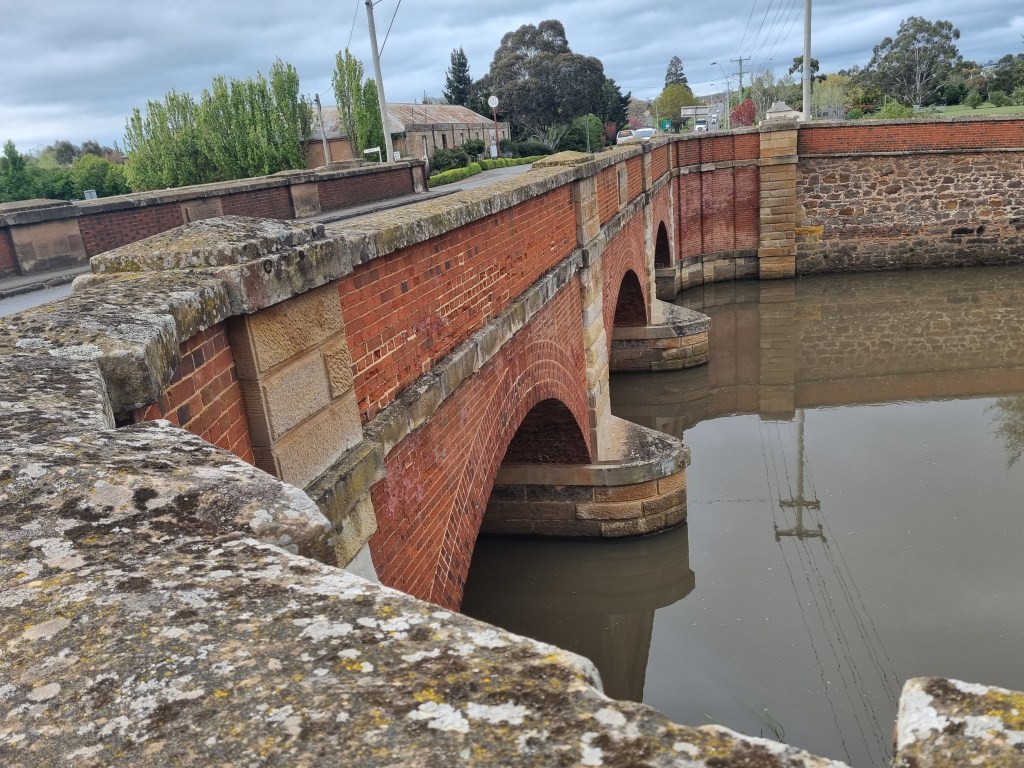
The town original buildings were built through free convict labor, like most places in Tasmania that had early settlements accredited to the British monarch. The most noticeable structure still in great shape would be the ‘Red Bridge’, the oldest bridge along the states national highway. The bridge is next to impossible to miss, as anyone travelling through Campbelltown will be caressed over said bridge. This rare, convict built stone mason work still holds up well after nearly two centuries of carrying vast amounts of transportation across it for two hundred or so years.
The saw milling, and sheep farming industries were the main settlement initiatives. While saw milling has nearly evaporated from the area as an industry in the 21st century, many generational lamb farms are still operational in the locality of Campbelltown, and neighboring townships.
A lady by the name of Eliza Forlonge was arguably the first person to settle in the region with the sheep, be it the prized Marino breed. After losing numerous children to tuberculosis in the 1820s, she and her husband began to plot their relocation to the warmer climates of Australia. Merino sheep from Saxony, Germany, were regarded as the finest sheep breed in the 1820s, so after numerous expeditions to the lands of Germania to study all things sheep husbandry and wool, they were on a boat and destined for the great land down under. Now I am not sure why they choose Tasmania as a geographically friendly place, as opposed to the cold weather presented in Great Britain, but I am aware they arrived in Tasmania around 1831. After setting up their farms, and birthing one of Tasmania’s finest agricultural sectors, disputes with the British governance and their lack of granted farm land, the family would return to familiar pastures in England, as well as in other locations on the Australian mainland. One could argue her lack of time present in central Tasmania should bestow her lessor significance in the local communities, yet her name is firmly cast into local folklore. Check out more on Eliza here @ #https://en.wikipedia.org/wiki/Eliza_Forlonge

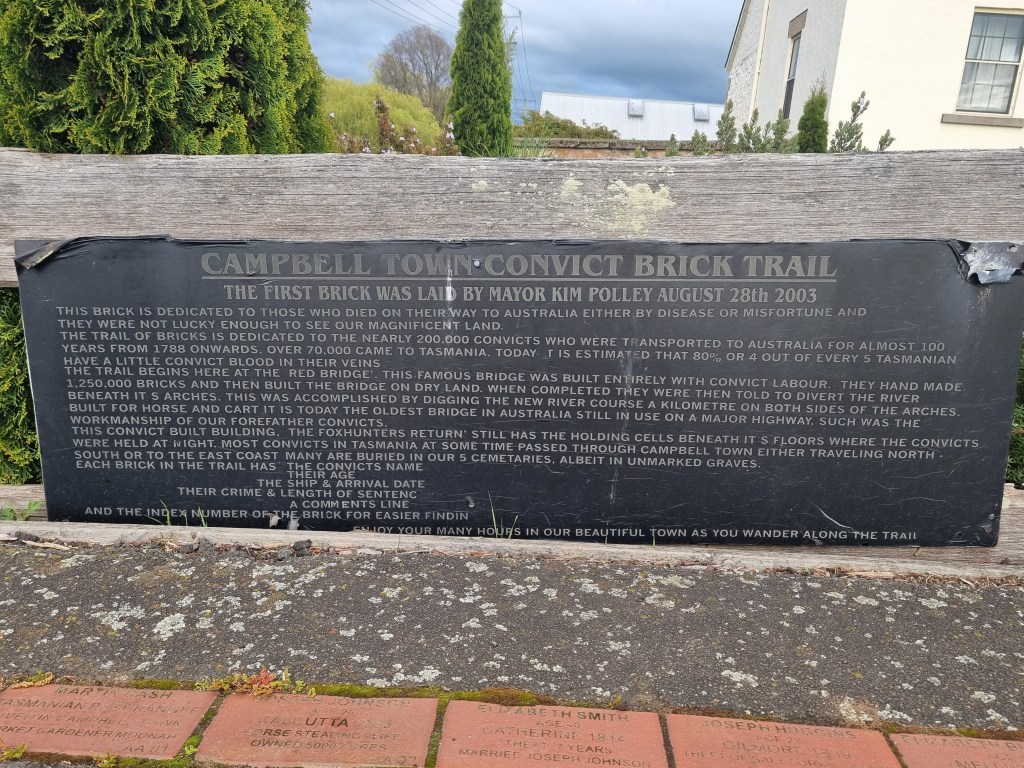
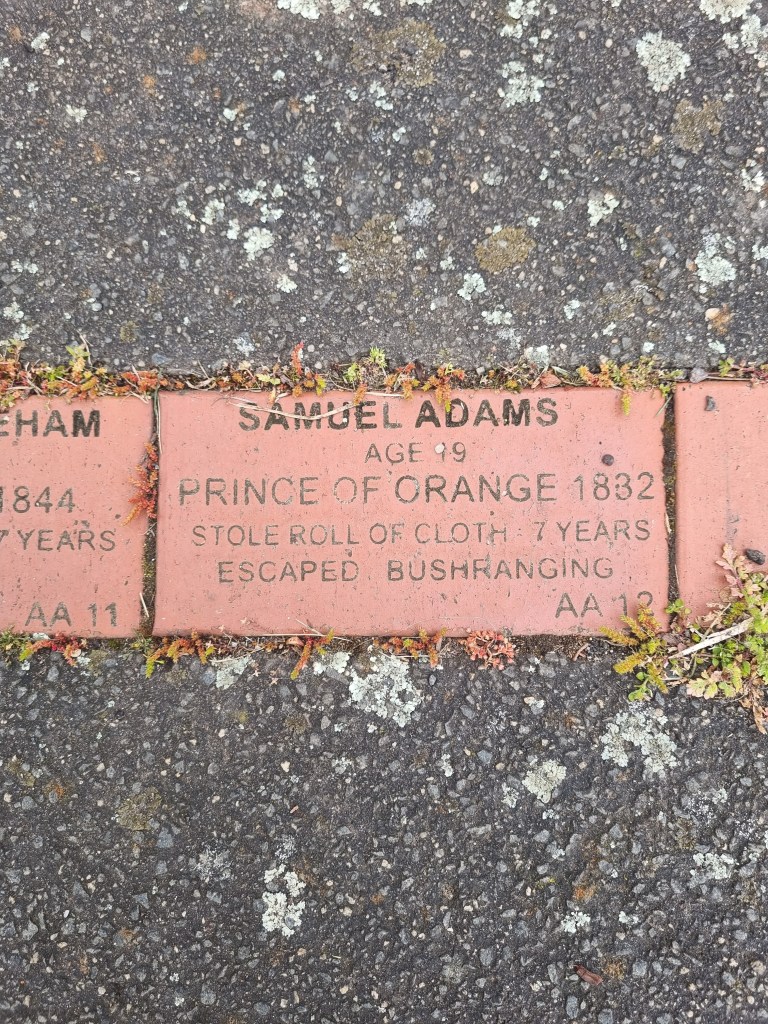
One other more notable aspects of the town is the convict brick trail. Up and down the main street, you can view the commemorative bricks that lay in remembrance of the convicts that built the original township and public buildings. The bricks report the convicts name, crime, and age at the time of their transportation from wherever they had resided in the British empire. It would be fair to say that getting a 7 year sentence for stealing a roll of cloth would be a bit harsh. Yet one could also argue the potential gains that may bestow those that arrived in Van Diemens land in the 1800’s as a a cloth stealing convict, may have significantly outweighed the opportunities present in their over populated, socially segregated societies that they had left behind.
…
February 2020
After numerous coffee stops at Zeps café over the years, it would be the best part of 15 years before I would return behind the scenes at Campbelltown’s arguably iconic Zeps café.
In those 15 or so years since my first interview at Zeps Café, or induction if you like, I had qualified, worked up through the ranks within the field of gastronomy and cookery, gotten married, got divorced, had a child, burned out a few times. While this time around, I would plotting my way out of the hospitality industry, and into one of academia and science.
Fausto had moved on, while his brother Zep, the ‘Zep’, had taken a step back to allow his eldest sibling and other half to take the reins of one of Tasmania’s most well visited and busiest travel eateries.
And as for me, I was lucky enough to have landed a gig working for some genuine hospitality good guys over the outbreak of the world wide pandemic, known as COVID-19. After toiling away at the job through nationwide lockdowns, helping with re-implementation of kitchen operations at the end of lockdown, I would come to the conclusion that to be a full time kitchen member, one must invest his entirety into the position, for which would prove most difficult while attempting to acquire a ‘bachelors of science’ degree.
I had always felt bad about never even calling Fausto back all those years ago, yet I was a much better person, and chef, for the experience at Zeps Café. Choosing Cradle mountain over the crew at Zeps would turn out to be very fruitful for me, yet I trust that had I taken the job all those footy seasons ago in Campbelltown, things would have worked out fairly fruitful anyway.
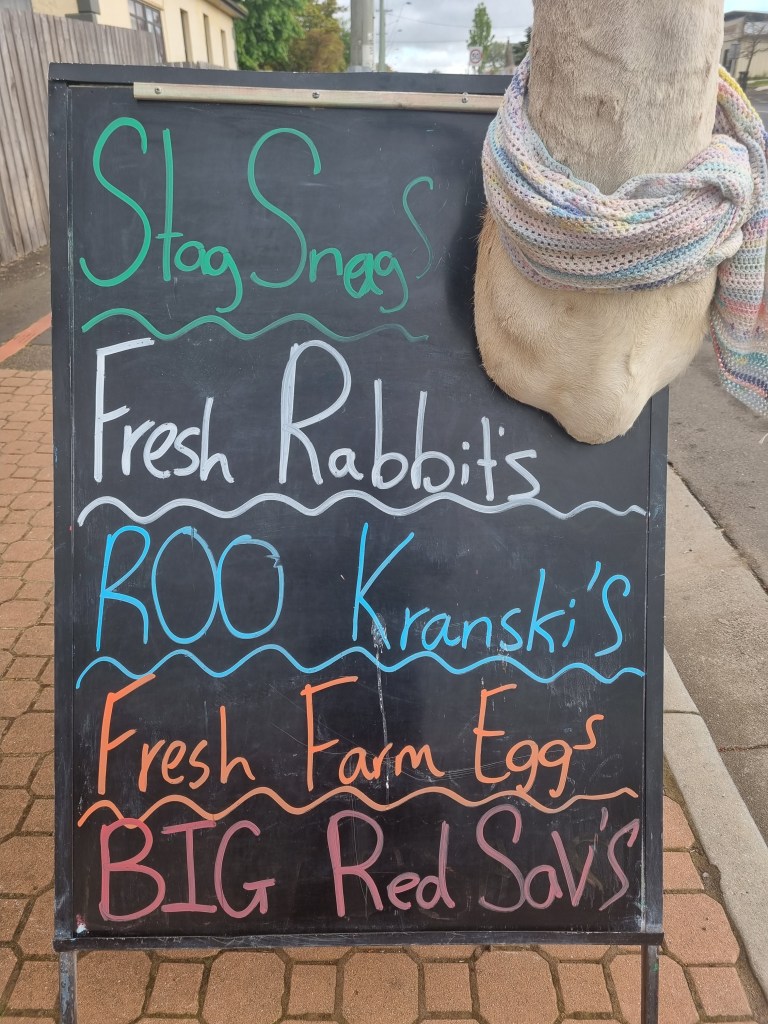
Campbelltown is a great place to stop and get a feed, or to check out some of Tasmania’s most historic buildings if you travelling through the center of Tasmania. Be certain to stop by the red bridge, Zeps café, the mad butcher, or any other establishment in Campbelltown for a look, I am sure you wont regret it.
References and links-
I found this gentleman’s blog about Campbelltown while researching this project-http://ontheconvicttrail.blogspot.com/
Eliza Forlonge-https://en.wikipedia.org/wiki/Eliza_Forlonge
Campbelltown show-http://www.campbelltownshow.com.au/whats-on/
Zeps café-https://www.zeps.com.au/
Go for a look and check out Campbelltown, Tasmania- https://www.discovertasmania.com.au/about/regions-of-tasmania/launceston-and-north/campbell-town

 Tales of a Tassie Chef