The sweet, succulent slow roasted tomato! Often confused with the intensely flavored and closely named sun dried tomato, this is a must have for this cat in any salad or toasted sanga.
This process is a grand way to do something different with your extra tomatoes that you are looking at throwing in the bin, or a cheaper option that purchasing them from your supermarket or wholesaler.
These H2O reduced, common garden staple are a great way to increase the longevity of one’s tomato, while increasing their effect on your flavor starved palate.
Ingredients.
700g Cherry tomatoes (normal, large tomatoes are suffice)
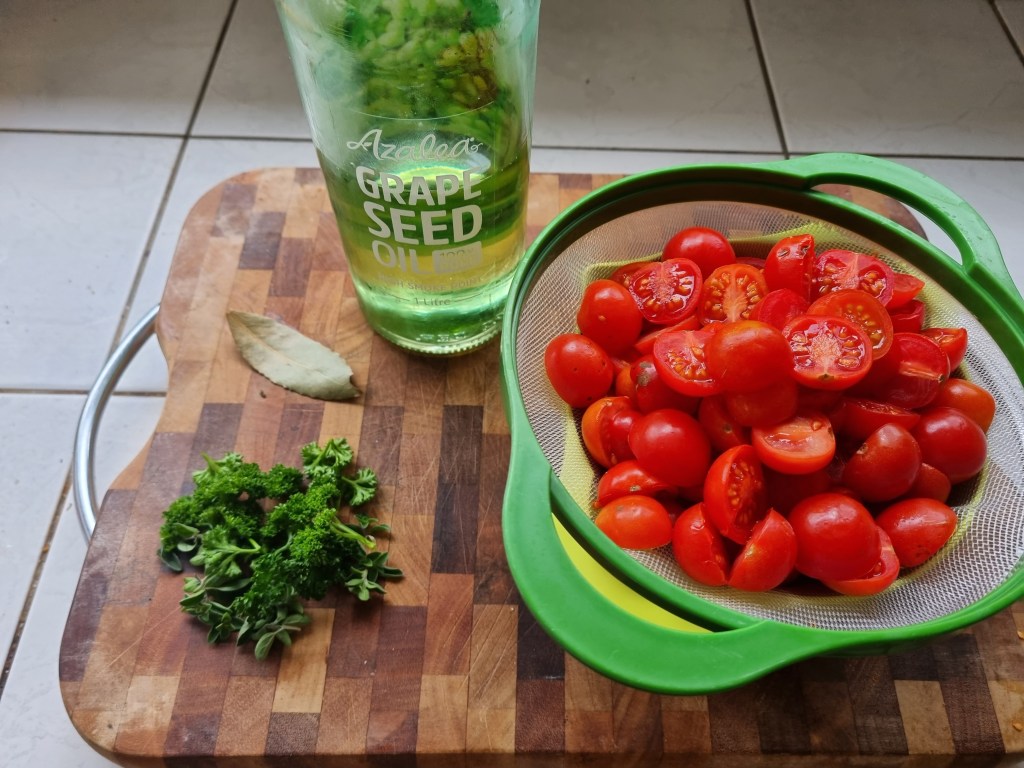
Few sprigs each of fresh parsley, oregano and thyme.
1 shot of grape seed oil
Salt and pepper
Apparatus.
Chopping board
Sharp knife
Salad bowl (big enough to only half fill with your prepared delicacies)
Oven tray
Grease proof paper
Colander
Method.
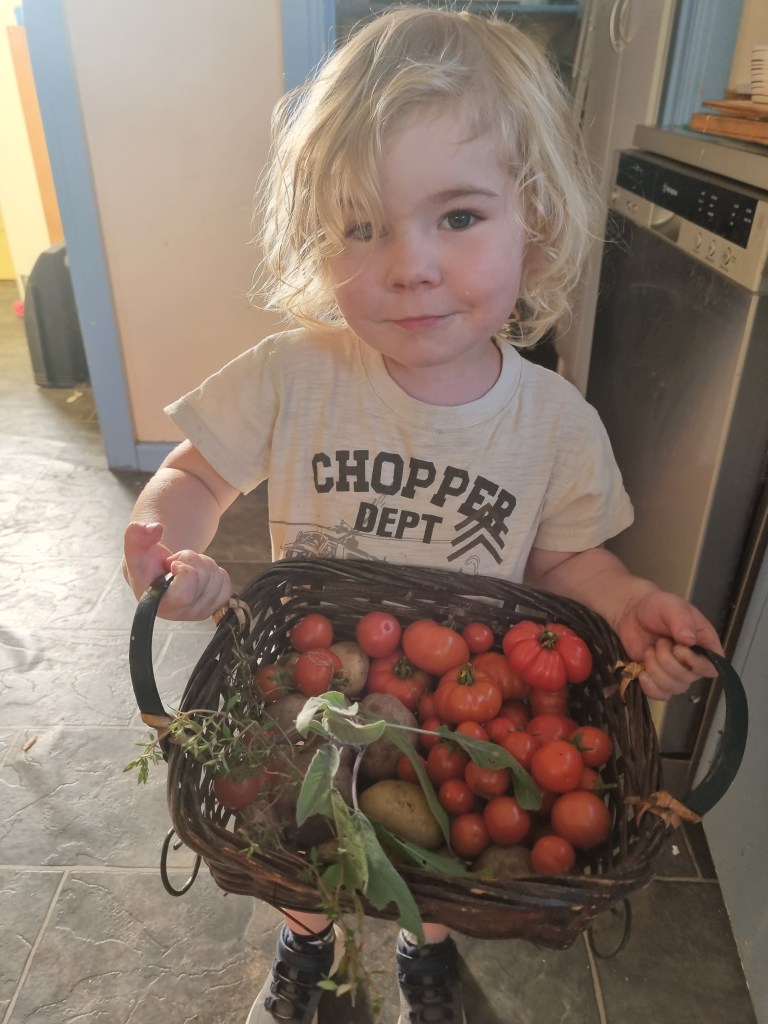
Place your freshly plucked, or vintage kept tomatoes in your colander and give them a rinse under cold water to remove any unwanted impurities. Allow to dry in the sun or speed up the process by rolling them onto a clean tea towel and resting them for five minutes.
Set your chopping board up with a damp, flatly laid cloth underneath to prevent sliding. If your using cherry tomatoes, then slice them vertically down the middle, through the core. if your using a more common, larger tomato variety, then follow the same process to begin with, then slice your halves into quarters, then into smaller wedges. You do not want these bad boys being any thicker then 15 millimeters (1.5cm), as you will risk making the tomatoes caramelize excessively on the outsides before they have leached enough H2O.
Once your tomatoes are all sliced and into the bowl, finely chop your herbs, then place them into the bowl with your grape seed oil and a few pinches of salt, and stir gently, ensuring you do not turn your half sphere, or quartered tomatoes into a mangy bowl of raw soup.
Place the well mixed ingredients back into your colander, then place the colander back over you mixing bowl with enough room at the bottom so as the excess juice that you want to siphon off is separated from the tomatoes. You preferably want the tomatoes to rest in the fridge overnight, but a couple of hours should be suffice. This last process is simply allowing excessive moisture to run of your tomatoes before getting your oven to take over the process.
Once you are content that enough tomato juice has drained from your tomatoes, crank the oven up to 120c, line your baking tray with grease proof paper, and start to gently lay out your tomatoes on to the tray, skin side down. The cherry tomatoes are easy, while the larger varieties need to stand up right if possible, see how you go. So long as the moist, center part of your tomatoes can leach their H20 content, then you’ll be on the way. Place tomatoes into the oven and set your trusty timer for 60 minutes.
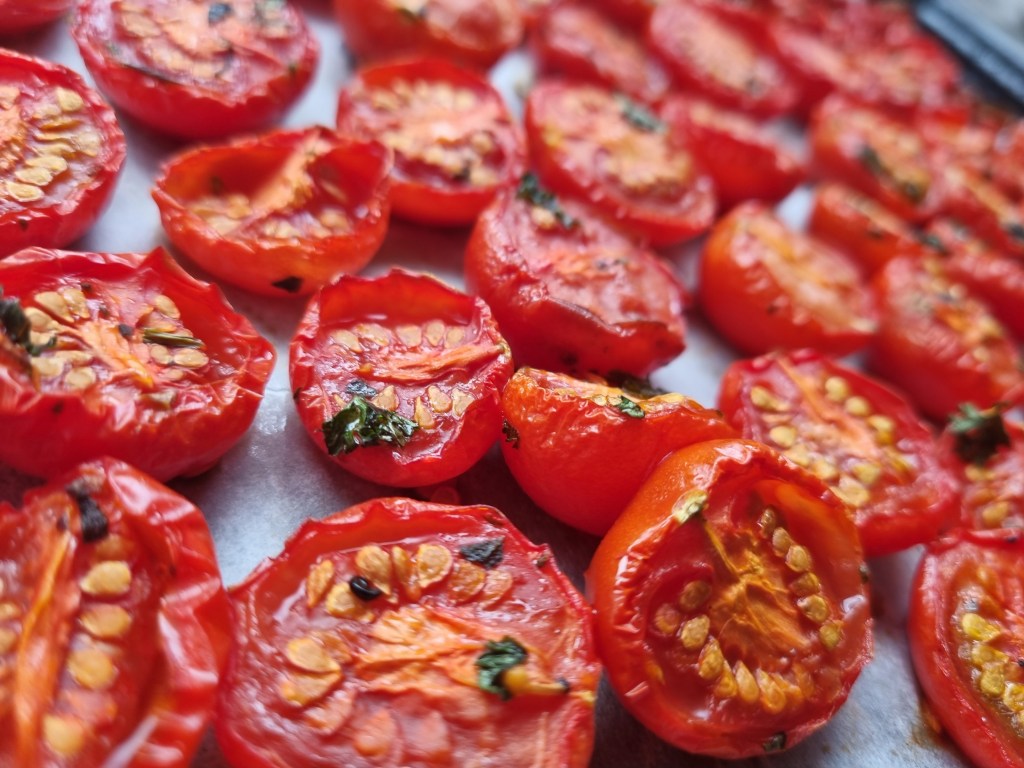
Upon first inspection, you should notice that they are only showing a minimal amount of shrinkage, yet the outside tomatoes will be further progressed than the inner tomatoes, due to the lack of air flow between the heavier concentration of the inner tomatoes. You will now need to make an educated decision as to how long the outer layers will take until they are ready and set your timer accordingly. For mine, and with the tomatoes I utilized for this recipe, my outer circle only needed a further thirty minutes, and my inner circle took a further thirty minutes after that until they reached the moist, wrinkly in appearance consistency that I desired. You want roughly 30-40% of weight lost in H20, and they should be wrinkly like you Nans lips (sorry nan) when they are ready.
As you gently remove your layers of half dried goodness, place them into a large container or storage vessel without bunching or staking them up on top of each other. Remember we are not looking to make soup here! Your tomatoes will go soggy if you let them steam their moisture into each other, and your salad will end up having squashed splatters of tomato flavor in it, instead of something that resembles semi dried tomatoes.
Once your tomatoes have cooled to room temperature, crack a little fresh pepper over them (preferable black), place them into a more space friendly container, and whack them into the fridge. I find I can keep mine at home for about two weeks, but be vigilant in your inspection of them after a week, as they will turn from one high tide to the next low tide. Covering them with oil may extend their life span a little, yet not much. There is still enough moisture in the tomatoes to make them turn, and unless you want to go down the food additive path, simply covering something with oil will not prevent them from making you sick for much longer than a week or two when covered with oil.
I used to purchase a 10 kilogram box of seconds tomatoes in my last head chef gig for $20- $30, dependent on availability, which would yield me roughly 6- 7 kilograms of slow roast tomatoes. In comparison to store bought semi-dried tomatoes, I would pay roughly $30 for 2 kilogram tub of semi-dried tomatoes, for which only 1 kilogram was usable yield. For pretty well the same price, I would transpose an extra five or six kilograms of tomatoes into my desired end product.
Not only is this a great way to save your old tomatoes that may not be utilized fresh, but this is a great way to save on some of your businesses inputs.
#Pro tip! Tomato skin is one of the truly strongest textures in any kitchen. Cutting through a room temperature tomato is my go to when I have sharpened my blades. To ensure you do not mash your tomatoes before they even get in to the bowl, give your knife a run over a a wet stone or one of those metal eating knife sharpeners that are common place for those that lack a stone sharpening skill set. The knife eaters will sharpen your blade, but they obviously eat and grind away the metal in the process. Just make sure your blade, of knife, is sharp when cutting your lovely home grown, fully ripened tomatoes.

 Tales of a Tassie Chef
One thought on “Slow Roast tomatoes”